LEICA SP14 Geosystems Inertial Gnss Slope Sensor 782749
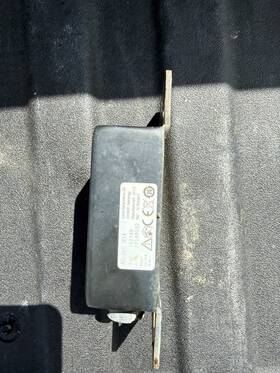
( Brand: Leica ), ( Manufacturer Part Number: SP14 ), ( Part Type: Sensor ), ( Unit Type: Unit ), ( Product: Sensor For Dozer ), ( Country Of Origin: Switzerland )
Review LEICA Geosystems Inertial Gnss Slope Sensor Dozer
The **Leica SP14 Geosystems Inertial GNSS Slope Sensor** is a cutting-edge, high-precision field instrument designed to revolutionize topographic surveys, construction monitoring, and geospatial data collection by seamlessly integrating inertial measurement technology with GNSS (Global Navigation Satellite System) positioning. Engineered for professionals demanding unparalleled accuracy and efficiency, this advanced device combines real-time kinematic (RTK) GNSS capabilities with an integrated inertial measurement unit (IMU) to deliver dynamic slope measurements, vertical control, and high-resolution terrain modeling with exceptional reliability. Ideal for applications such as roadway and railway alignment, dam inspections, bridge construction, and large-scale civil engineering projects, the SP14 excels in environments where traditional surveying methods struggle such as in motion, under dense foliage, or in areas with limited satellite visibility. Its robust design incorporates a high-performance IMU with three-axis accelerometers and gyroscopes, ensuring stable and drift-free slope measurements even in challenging conditions like steep grades, moving vehicles, or rapidly changing terrain. The sensor s compact yet durable construction, paired with a user-friendly interface, allows for seamless integration into existing workflows, whether used independently or as part of a larger Leica Geosystems surveying ecosystem. With its ability to capture precise slope angles, elevation changes, and spatial coordinates in real time, the SP14 empowers surveyors and engineers to make data-driven decisions with confidence, reducing errors, minimizing field time, and enhancing overall project accuracy. Whether deployed on foot, mounted on a vehicle, or integrated into a drone or robotic total station, this instrument sets a new standard for precision in dynamic surveying applications, ensuring that every measurement reflects the true geometry of the earth s surface with millimeter-level consistency.
### **Pros and Cons of buying a Leica SP14 GeoSystems Inertial GNSS Slope Sensor (Part No. 782749)**
#### **Pros**
1. **High Precision for Slope Measurement**
The Leica SP14 is designed for high-accuracy slope and angle measurements, making it ideal for civil engineering, construction, and surveying applications where precise grading and terrain analysis are critical.
2. **Robust and Durable Construction**
Built for field use, the device is rugged and resistant to harsh environmental conditions, including dust, moisture, and temperature fluctuations, ensuring reliability in demanding work environments.
3. **Integration with Leica GNSS Systems**
It is compatible with Leica s GNSS (Global Navigation Satellite System) receivers, allowing for seamless data collection and integration with existing surveying workflows. This reduces the need for manual measurements and minimizes human error.
4. **Fast and Efficient Data Collection**
The sensor provides real-time slope and angle readings, accelerating fieldwork and improving productivity compared to traditional manual methods like clinometers or inclinometers.
5. **Versatile Applications**
Suitable for a wide range of tasks, including road grading, excavation monitoring, pipeline alignment, and topographic surveys. Its adaptability makes it a valuable tool for contractors, engineers, and surveyors.
6. **Data Export and Software Compatibility**
The device can export data in formats compatible with Leica s surveying software (e.g., Leica GeoOffice, Leica Cyclone), enabling easy analysis, reporting, and integration with CAD or BIM systems.
7. **Long-Term Reliability and Brand Reputation**
Leica GeoSystems is a well-established brand known for high-quality surveying and geospatial equipment. The SP14 s reputation for durability and accuracy suggests it will remain functional for years with proper maintenance.
8. **Reduced Labor Costs**
By automating slope measurements, the SP14 minimizes the need for manual labor, lowering operational costs and improving project efficiency.
---
#### **Cons**
1. **High Initial Cost**
The Leica SP14 is an expensive piece of equipment, especially when purchased outright. This may be a significant investment for small businesses, contractors, or individuals without substantial capital.
2. **Dependency on Leica Ecosystem**
While the sensor integrates well with Leica s GNSS systems, it may require additional hardware (e.g., a compatible GNSS receiver) to function optimally. Users already invested in non-Leica systems might face compatibility issues or the need for extra purchases.
3. **Training and Learning Curve**
Operating advanced surveying equipment effectively requires training. Users unfamiliar with Leica s software or inertial GNSS technology may need time to become proficient, potentially slowing initial adoption.
4. **Maintenance and Calibration Requirements**
Like all precision instruments, the SP14 may require periodic calibration and maintenance to ensure accuracy. This adds to the long-term cost of ownership, including potential downtime if servicing is delayed.
5. **Limited Portability for Some Users**
While the sensor is rugged, it is not as compact as handheld clinometers or digital inclinometers. Larger projects or remote locations may require additional logistics to transport the equipment safely.
6. **Software Dependency**
Full functionality relies on Leica s proprietary software. Users may face licensing costs, updates, or compatibility issues if they switch to alternative software solutions in the future.
7. **Overkill for Small-Scale Projects**
For very small or simple slope measurements (e.g., DIY grading or minor landscaping), the SP14 s advanced features may be unnecessary, making it a costly overinvestment for occasional use.
8. **Resale Value Considerations**
High-end surveying equipment like the SP14 may depreciate over time. While Leica products retain value, the resale market for specialized sensors can be limited, potentially impacting long-term ROI.
---
### **Conclusion**
The **Leica SP14 GeoSystems Inertial GNSS Slope Sensor** is a **highly capable, precision tool** tailored for professional surveying, construction, and engineering applications where accuracy and efficiency are paramount. Its strengths lie in its **durability, integration with Leica s ecosystem, and real-time data collection capabilities**, making it a valuable asset for large-scale projects or businesses heavily invested in Leica s surveying solutions.
However, the **high upfront cost, ecosystem dependency, and maintenance requirements** may pose challenges for smaller firms, individuals, or those with limited budgets. It is **not a necessary purchase** for casual or small-scale users but is **highly justified** for professionals who prioritize speed, accuracy, and long-term reliability in their work.
### **Recommendation**
- **Buy if:**- You are a **professional surveyor, civil engineer, or contractor** working on large-scale projects requiring precise slope measurements.
- You already use **Leica GNSS receivers or software** and want seamless integration.
- You can **justify the cost** based on long-term productivity gains and reduced labor expenses.
- You operate in **harsh environments** where durability is critical.
- **Avoid if:**- You are a **small business or individual** with limited budget and infrequent need for slope measurements.
- You are **not invested in Leica s ecosystem** and prefer open or alternative surveying solutions.
- Your projects are **small-scale or DIY-oriented**, where a simpler, cheaper tool (e.g., a digital inclinometer) would suffice.
- You cannot commit to **training, maintenance, and potential software costs** associated with advanced equipment.
For most **professional users in need of high-precision slope data**, the Leica SP14 is a **strong recommendation** due to its reliability and efficiency. For others, exploring **alternative sensors or renting** the equipment may be a more cost-effective approach.
Details:
Used in working condition.
part #: sp14 prices
- $1800.00-$2016.75
specifications totalstationsurveyzo:
- brand: Leica
- mpn: Sp14
- part type: Sensor
- unit type: Unit
- product: Sensor For Dozer
- country of origin: Switzerland
payments totalstationsurveyzo:
- credit card: Discover
- wallet: Apple-pay
- money order
- other
general totalstationsurveyzo:
- condition: Used
- Test, Measurement Inspection > Levels Surveying Equipment > Total Stations Accessories
returns totalstationsurveyzo:
- policy: No Returns
shipping totalstationsurveyzo:
- cost: $56.85
- carrier: USPS
- service: USPS Ground Advantage
- transit: 4-11 Days
- type: Calculated
- class: Standard
seller totalstationsurveyzo:
- # reviews: 112
- city: La Grange, North Carolina
- rating: 100.0%
offer totalstationsurveyzo:
- sold: 0
- availability: In Stock
- options: Ship-to-home
- quantity: 1
- started: March 30, 2026
- best offers: True
Leica SP14 Is Similar To:
- 020109 Leica Sequential Charger Model For Surveying (37.9% similar) 0v input dc 12V w output...(March 2nd, 2018)
- 2090-00 Seco Height Adapter For Leica Prism (22.2% similar) 5/8 x 11 aluminum prism height adapters allow the base pole to be used with other manufacturers prisms for adapting wild Leica poles prisms...(March 15th, 2019)
- 394792 Leica Wild Battery Box For Autocollimation Eyepiece (30.9% similar) Feel free to contact me with any questions...(September 13th, 2018)
- 555015 Leica Ict Condenser Prism For Dm Microscope (36.5% similar) ...(January 17th, 2019)
- 555016 Leica Ict Condenser Prism For Dm Microscope (36.5% similar) ...(January 17th, 2019)
- 565854 Leica Small Power Cable For Total Station Surveying (34.1% similar) ...(February 27th, 2019)
- 6006291 Leica Geosystems Digicat Bundle With Carry Bag 5060274850133 (46.6% similar) Part: 5060274850133 prices...(October 27th, 2018)
- 6008610 Leica Geosystems Rugby Rotary Laser Self Levelling Horizontal (35.8% similar) If item won is over 2,500...(March 22nd, 2018)
- Grz4 Reflector 639985 Prism Geosystems Degree 360 Leica Replacement Style (30.4% similar) States only. This is a brand new item, never been used. Please see pictures for more details. Shipping to lower 48 us. Our equipment is priced to sell. We buy anything from entire surveying, construction, and plumbing outfits to single instruments and tools and have been wholesaling these ...(February 3rd, 2015)
- 663095 Tripod Geosystems Art Telescopic Leica Surveying Bst01l Aluminium (37.1% similar) It is expandable to 5'8' and is about lbs. This item is a used Leica surveying tripod. It is in great working condition a well taken care of...(January 27th, 2015)
- 667220 Leica Geosystems Gad34 Data (40.4% similar) I don't no anything about this item so please look at pictures as part of the. The bag is a little dirty on outside besides that great condition. Comes with what you see in pictures. This item is used...(May 19th, 2017)