SPARKFUN GPS-20000 Rtk Facet High Precision Geolocation Surveying
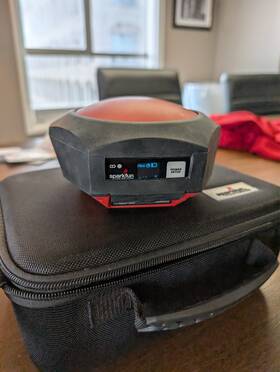
( Brand: Sparkfun ), ( Manufacturer Part Number: GPS-20000 ), ( Product: Gps Receiver ), ( Country Of Origin: United States )
Review SPARKFUN Rtk Facet L band High Precision Geolocation And Surveying
The **SparkFun GPS-20000 RTK FACET L-Band High Precision Geolocation Surveying Module** is a cutting-edge, ultra-high-precision positioning solution designed for professional surveyors, geospatial engineers, and precision agriculture applications where millimeter-level accuracy is non-negotiable. Built around the **u-blox FACET RTK2B** chipset, this compact yet robust module integrates **L1/L2/L5 frequency bands** alongside **L-band interference mitigation**, ensuring unparalleled resilience against signal corruption from satellite-based augmentation systems (SBAS) or other electromagnetic interference. The device leverages **Real-Time Kinematic (RTK) corrections** via dual-frequency carrier-phase tracking, enabling centimeter-level accuracy in open-sky conditions and sub-centimeter performance when paired with a compatible base station or network correction service. Its **high-sensitivity receiver** excels in challenging environments, such as dense urban canyons or under dense foliage, where traditional GNSS modules struggle to maintain lock. The module s **L-band interference rejection** is particularly critical in modern aviation and military contexts, where interference from satellite communications or radar systems could otherwise degrade positioning integrity.
At the heart of the GPS-20000 is **u-blox s advanced RTK2B engine**, which supports **multi-constellation tracking** (GPS, GLONASS, Galileo, and BeiDou) for enhanced redundancy and reliability. The module s **high-precision atomic clock** and **ultra-stable oscillator** ensure minimal drift, while its **low-power consumption** (optimized for battery-powered field deployments) makes it ideal for extended surveying missions. The **SparkFun-designed PCB** incorporates robust shielding and filtering to mitigate noise, while its **industrial-grade connectors** and **wide operating temperature range** (-40 C to 85 C) ensure durability in harsh outdoor conditions. Whether deployed in **land surveying, autonomous drones, precision farming, or infrastructure monitoring**, this module delivers the accuracy and reliability required for mission-critical geospatial applications. Its **open-source firmware and comprehensive documentation** further empower developers to integrate it seamlessly into custom systems, from standalone surveying devices to complex robotic platforms. With the GPS-20000, users gain access to a **next-generation RTK solution** that bridges the gap between raw GNSS data and actionable, high-precision geolocation redefining the standards for modern surveying and positioning technology.
The SparkFun GPS-20000 RTK FACET L-Band High Precision Geolocation Surveying module is a high-end GNSS (Global Navigation Satellite System) receiver designed for professional surveying, geospatial applications, and precision agriculture. Below is a detailed breakdown of its pros and cons, followed by a conclusion and recommendation.
---
### **Pros**
1. **High Precision Capabilities**
The GPS-20000 supports Real-Time Kinematic (RTK) corrections, enabling centimeter-level accuracy (sub-1 cm horizontal and vertical) when paired with a base station or RTK network. This is ideal for surveying, mapping, and construction applications where precision is critical.
2. **Multi-Constellation Support**
It supports multiple GNSS constellations, including GPS, GLONASS, Galileo, BeiDou, and QZSS. This increases satellite visibility, improves signal reliability, and reduces time-to-first-fix (TTFF) in challenging environments like urban canyons or dense forests.
3. **L-Band Receiver**
The L-Band receiver allows the module to track signals from satellite-based augmentation systems (e.g., SBAS like WAAS, EGNOS, MSAS, and GAGAN) and other geostationary satellites. This enhances accuracy and availability, especially in areas with weak signals.
4. **High-Sensitivity Performance**
The receiver is designed for weak-signal environments, such as under dense foliage or in urban areas with signal obstructions. This makes it suitable for applications where traditional GNSS receivers might struggle.
5. **Compact and Rugged Design**
The module is compact and built for durability, making it suitable for fieldwork where ruggedness and portability are important. It can be integrated into drones, rovers, or handheld devices.
6. **Software-Defined Radio (SDR) Capabilities**
The FACET platform is software-defined, allowing for firmware updates and customization. This means the module can adapt to future GNSS advancements or specific application needs.
7. **Compatibility with RTK Networks**
It can connect to RTK correction services (e.g., via cellular, radio, or internet) to achieve high precision without requiring a local base station. This is convenient for field surveys where setting up a base station is impractical.
8. **Wide Frequency Bands**
The module supports multiple frequency bands (e.g., L1/L2 for GPS, L1/L5 for Galileo, etc.), which helps mitigate multipath errors and improves overall accuracy.
9. **Open-Source and Developer-Friendly**
SparkFun provides extensive documentation, libraries, and examples for Arduino, Raspberry Pi, and other platforms. This makes it accessible for developers and hobbyists who want to build custom solutions.
10. **Useful for Advanced Applications**
Beyond surveying, it can be used for precision agriculture (e.g., autonomous tractors), drone mapping, autonomous vehicles, and scientific research requiring high-precision geolocation.
---
### **Cons**
1. **High Cost**
The GPS-20000 is an expensive module, especially when compared to consumer-grade GNSS receivers. The cost may be prohibitive for small businesses, hobbyists, or budget-conscious projects. Pricing can vary based on quantity and additional accessories (e.g., antennas, correction services).
2. **Complex Setup and Learning Curve**
Achieving centimeter-level accuracy requires understanding RTK corrections, antenna placement, and post-processing software. Users may need training or experience in geospatial technologies to fully utilize its capabilities.
3. **Power Consumption**
High-precision GNSS receivers like this one typically consume more power than consumer-grade modules. This may limit its use in battery-powered applications (e.g., long-duration drones or portable devices) unless power management is carefully optimized.
4. **Dependence on Correction Services**
While the module supports standalone RTK (with a base station), achieving high accuracy often requires access to RTK correction services (e.g., subscription-based networks). This adds ongoing costs and potential downtime if the service is unavailable.
5. **Limited Battery Life for Portable Use**
Due to its power-hungry nature, the module may not be ideal for extended fieldwork without external power sources. Users may need to carry additional batteries or power banks.
6. **Software and Firmware Updates**
As a software-defined device, it requires periodic firmware updates to support new GNSS constellations or corrections. Users must ensure they have the infrastructure to manage these updates, which could be a hassle for non-technical users.
7. **Antenna Requirements**
High-precision GNSS requires high-quality antennas to minimize multipath errors. The cost of compatible antennas (e.g., choke-ring antennas) can add to the overall expense.
8. **Not Ideal for Low-Precision Applications**
For applications where sub-meter accuracy is sufficient (e.g., basic navigation or tracking), the GPS-20000 is overkill and unnecessarily expensive. A cheaper GNSS module would suffice.
9. **Limited Availability of Accessories**
While SparkFun provides documentation, finding third-party accessories (e.g., custom mounting hardware, specialized antennas) may be challenging compared to more mainstream GNSS modules.
10. **Regulatory and Licensing Considerations**
Some advanced GNSS applications (e.g., autonomous vehicles) may require additional certifications or compliance with local regulations. Users should verify legal requirements before deployment.
---
### **Conclusion**
The SparkFun GPS-20000 RTK FACET L-Band module is a powerful tool for professionals and developers requiring centimeter-level precision in geospatial applications. Its multi-constellation support, L-Band capabilities, and software-defined flexibility make it a standout choice for surveying, mapping, and advanced GNSS projects. However, its high cost, complexity, and power demands may not justify its use for casual users or low-precision applications.
For hobbyists or small-scale projects where budget is a concern, a lower-cost GNSS module (e.g., SparkFun s GPS-10000 or other mid-range RTK receivers) might be a more practical alternative. Conversely, for commercial surveying firms, precision agriculture, or research institutions, the GPS-20000 s capabilities justify its investment, provided the user has the technical expertise or resources to support it.
---
### **Recommendation**
- **Buy the GPS-20000 if:**- You are a professional surveyor, geospatial engineer, or researcher requiring centimeter-level accuracy.
- Your project involves precision agriculture, autonomous vehicles, or drone mapping where high-precision GNSS is critical.
- You have the budget to cover both the hardware and potential correction service subscriptions.
- You are comfortable with the technical setup, including RTK corrections, antenna placement, and post-processing software.
- **Avoid the GPS-20000 if:**- You need a cost-effective solution for basic navigation or tracking (sub-meter accuracy is sufficient).
- Your project has strict power constraints (e.g., long-duration battery-powered devices).
- You lack the technical expertise to configure and maintain the module or its associated systems.
- You are a hobbyist or small business with limited resources for high-end GNSS equipment.
For users on a tighter budget but still needing high precision, consider exploring other RTK modules (e.g., u-blox ZED-F9P, Septentrio Aster) or evaluating whether a lower-cost GNSS module with post-processed RTK corrections (e.g., using a base station) would meet your needs. Always weigh the long-term value of the module against your specific project requirements.
Details:
By connecting your phone to the RTK Facet L-Band over Bluetooth, or tablet can receive NMEA output and work with most GIS software. With built-in corrections, 14mm Real Time Kinematic fixes are less than a minute away. For basic users, its incredibly easy to get up and running; for advanced the RTK Facet L-Band is a flexible powerful tool. This is exactly how $10,000 surveying devices have been operating for the past decade - we just made it faster, more precise, and a lot economical.
Used on one project, its been sitting my desk for two years, time to find a new home.
part #: gps20000 price
- $989.00
specifications totalstationsurveyzo:
- brand: Sparkfun
- mpn: Gps-20000
- product: Gps Receiver
- country of origin: United States
general totalstationsurveyzo:
- Test, Measurement Inspection > Levels Surveying Equipment > Total Stations Accessories
- condition: Used
offer totalstationsurveyzo:
- started: February 9, 2026
- options: Ship-to-home
- quantity: 1
- availability: In Stock
- sold: 0
seller totalstationsurveyzo:
- city: Eugene, Oregon
- rating: 100.0%
- # reviews: 73
payments totalstationsurveyzo:
- wallet: Apple-pay
- other
- credit card: Visa
shipping totalstationsurveyzo:
- carrier: USPS
- transit: 4-12 Days
- service: USPS Priority Mail
- type: Calculated
- class: Expedited
- cost: $12.58
returns totalstationsurveyzo:
- policy: No Returns
Sparkfun GPS-20000 Is Similar To:
- 7445056243279 Sparkfun Gps Breakout Qwiic No Soldering Required Bre (33.6% similar) The Sparkfun NEO-M9N gps breakout is also equipped with an on-board rechargeable battery that provides power to ROTC on. Were happy to help. U-bloc based gps products are configurable using the popular, but dense, windows program called u-center. Fl quick breakout no soldering required Brie. ...(June 12th, 2021)
- Sparkfun Gps-23748 Rtk Mosaic X5 (42.6% similar) The antenna on top of the trailer works great. The unit was mounted inside. This was used as a base station for six months mounted to construction trailer...(March 8th, 2025)
- Sparkfun 3711010424021 Triband Rtk Torch Precision Gps Positioning In Your Pocket Es980 Pro (46.7% similar) With fast signal acquisition, low-latency correction support, and extended battery life, the turbaned rtk torch ensures you can work longer, smarter, with complete confidence in your data accuracy. Its versatile design allows seamless integration with mobile devices, drones, or surveying equipment, ...(September 22nd, 2025)
- Sparkfun Gps-18380 Rtk Express Kit Read Description (45.7% similar) Part #: Sparkfun GPS-18380 for sale...(February 3rd, 2026)