TRIMBLE BX982 Gnss Rtk Dual Antenna Sensr Accelerometer Accelerometer/inclinometer
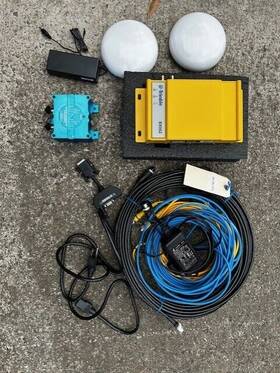
( Brand: Trimble ), ( Manufacturer Part Number: BX982 ), ( Model: TRIMBLE BX982 ), ( Part Type: Antenna ), ( Product: Data Collector, Antenna, Gps Receiver )
Review TRIMBLE Gnss Rtk Dual Antenna Sensr Accelerometer/inclinometer
Trimble BX982 GNSS RTK Dual Antenna Sensor with Accelerometer/Inclinometer
The Trimble BX982 GNSS RTK Dual Antenna Sensor is a cutting-edge device designed for high-precision applications in the field of surveying, construction, and machine control. This advanced instrument is equipped with dual-frequency, multi-constellation GNSS technology, ensuring robust and reliable positioning in challenging environments.
The primary feature of the BX982 is its dual antenna configuration, which offers enhanced accuracy and stability. The first antenna is dedicated to GNSS positioning, while the second antenna is an integrated IMU (Inertial Measurement Unit) that includes an accelerometer and an inclinometer. This dual-antenna setup allows for reliable real-time kinematic (RTK) corrections and enhanced machine control functionality.
The integrated IMU offers several benefits. The accelerometer measures the acceleration forces on the device in three dimensions, providing valuable data for machine control, motion analysis, and vibration monitoring. The inclinometer, on the other hand, measures the tilt or inclination of the device in pitch and roll angles, making it ideal for slope monitoring and machine stability assessment.
The Trimble BX982 also offers advanced features such as Trimble's Maxwell 6 GNSS engine for superior satellite tracking and positioning, a high-sensitivity receiver for improved performance in challenging environments, and a robust IP68 rating for protection against dust and water. The device is compatible with Trimble's Access software for easy data collection, management, and analysis.
In summary, the Trimble BX982 GNSS RTK Dual Antenna Sensor with Accelerometer/Inclinometer is a versatile and powerful tool for various high-precision applications. Its dual-antenna setup, integrated IMU, and advanced GNSS technology make it an invaluable asset for surveying, construction, and machine control professionals seeking accurate, reliable, and efficient solutions.
Pros, Cons, and Recommendation for Trimble BX982 GNSS RTK Dual Antenna Sensor (Accelerometer/Inclinometer)
The Trimble BX982 GNSS RTK Dual Antenna Sensor, equipped with an accelerometer and inclinometer, offers a range of benefits and potential drawbacks for users in various industries.
Pros:1. High-precision GNSS: The Trimble BX982 provides centimeter-level positioning accuracy, ensuring efficient and accurate measurements in construction, surveying, and mapping applications.
2. Dual-frequency technology: This feature enhances signal robustness and reliability, reducing the risk of interference and improving positioning performance in challenging environments.
3. Real-time kinematic (RTK) capabilities: The RTK feature allows for rapid convergence times, ensuring faster and more precise measurements, and reducing the need for extensive post-processing.
4. Built-in accelerometer and inclinometer: These sensors enable users to capture and analyze movement and orientation data, which can be particularly useful in construction and civil engineering applications.
5. Durable and rugged design: The device is designed to withstand harsh conditions, making it suitable for outdoor use and extreme weather conditions.
Cons:1. High cost: The Trimble BX982 is a premium device, and its price point may be prohibitive for some users or smaller projects.
2. Requires external base station: To operate in RTK mode, the device relies on an external base station, which may add to the overall cost and complexity of the solution.
3. Potential learning curve: Users may need to invest time in learning how to properly utilize the device's features and capabilities, especially for those new to GNSS technology.
4. Battery life: While the device offers long battery life, extended usage may still require frequent charging or additional battery packs, especially in continuous operation scenarios.
Conclusion:The Trimble BX982 GNSS RTK Dual Antenna Sensor offers a powerful, high-precision solution for users in need of accurate positioning, movement, and orientation data. Its benefits, such as centimeter-level accuracy, dual-frequency technology, and integrated sensors, make it an attractive option for professionals in construction, surveying, and mapping sectors. However, its high cost, requirement for an external base station, and potential learning curve may deter some users.
Recommendation:If the cost and requirements align with your project needs, the Trimble BX982 GNSS RTK Dual Antenna Sensor is a recommended choice for those seeking high-precision positioning, movement, and orientation data in challenging environments. For those with more budget-constrained projects, alternative solutions with similar features may be worth considering. It is essential to thoroughly evaluate your project requirements and compare various options before making a final decision.
Details:
Heading derived from dual antenna GNSS measurements overcomes these issues and is now economically the right choice. The BX982 harnesses the power of 220 channel Trimble Maxwell TM 6 Technology with dual chips supporting two antennas connected to board. Our robust software suite allows you to customize your analysis suit specific monitoring needs. 2 DUAL ANTENNA INPUT Single antenna GNSS systems have difficulty determining where the is positioned relative to vehicle and object of interest, especially when dynamics are low.
Just like other Trimble embedded technologies; easy to use software commands simplify integration and reduce development times. External sensors can be used to augment this however these tend drift when static. Its suitable for both indoor and outdoor environments installs onto your structure with standard hardware. The unit comes in an environmentally sealed enclosure that is very easy to install.
BX982 GNSS RUGGED RECEIVER ENCLOSURE The Trimble receiver enclosure is a multi-channel, multi-frequency OEM which allows Ems and System Integrator to rapidly integrate centimeter level positioning precise heading into their application. The Trimble BX982 supports GPS L1/L2/L5, GLONASS L1/L2/L3 and Baidu B1, B2 signals. Independent observations from both antennas are passed to the processor where multi-constellation RTK baselines computed.
part #: bx982 prices
- $1699.99-$7999.00
specifications totalstationsurveyzo:
- brand: Trimble
- mpn: Bx982
- model: Trimble Bx982
- part type: Antenna
- product: Data Collector, Antenna, Gps Receiver
returns totalstationsurveyzo:
- policy: No Returns
seller totalstationsurveyzo:
- rating: 0.0%
- city: Belmont, North Carolina
- # reviews: 31
payments totalstationsurveyzo:
- wallet: Apple-pay
- credit card: Diners-club
- other
offer totalstationsurveyzo:
- best offers: True
- sold: 0
- quantity: 1
- availability: In Stock
- started: April 2, 2025
- options: Ship-to-home
general totalstationsurveyzo:
- condition: Used
- Test, Measurement Inspection > Levels Surveying Equipment > Total Stations Accessories
shipping totalstationsurveyzo:
- transit: 3-8 Days
- class: Standard
- cost: $30.00
- type: Fixed
- carrier: UPS
- service: UPS Ground
Trimble BX982 Is Similar To:
- 0.1272979133813592 Trimble Gps Antenna (32.4% similar) I'll get back to you as soon I can. Shows signs of normal use w some scuffs scratches blemishes sticker residue no other accessories hardware software...(March 13th, 2018)
- 0.2689843391508313 Trimble Net Modular Gnss System With Zephyr Geodetic Model Antenna (38% similar) I'll get back to you as soon I can. Condition: used, working self tests show OK includes 48V Cisco Poe injector and Ethernet cable battery holds charge shows signs of normal use w some scuffs scratches blemishes sticker residue no other accessories hardware software...(March 29th, 2018)
- 0.28478468765079357 Trimble Net Modular Gnss System With Zephyr Geodetic Model Antenna (37.7% similar) I'll get back to you as soon I can. Condition: used, working self tests show OK includes 48V Cisco Poe injector and Ethernet cable battery holds charge shows signs of normal use w some scuffs scratches blemishes sticker residue no other accessories hardware software...(March 15th, 2018)
- 0.3553457821689521 Trimble Zephyr Gps Antenna Qty (34.4% similar) I'll get back to you as soon I can. Shows signs of normal use w some scuffs scratches blemishes sticker residue no other accessories hardware software...(March 14th, 2018)
- 0.4909462122394743 Trimble Zephyr Gps Antenna Qty (34.4% similar) Shows signs of normal use w some scuffs scratches blemishes sticker residue no other accessories hardware software. I'll get back to you as soon I can...(March 29th, 2018)
- Xrs Antenna Pro Ag Gps 0220209655 Trimble 33580-50 Xr Pathfinder Ms (25.7% similar) Trimble gps pathfinder pro XR Xes dam Ag antenna P/Nn...(January 12th, 2015)
- Leica Gps Pro 02203 Xrs Pathfinder Bag Dsm Ag Soft Antenna Trimble Sokkia 4 (32.4% similar) ...(January 27th, 2015)
- 10-10008 Trimble External Radio Antenna (35.7% similar) 2: contact your local post office. Shipping method: USPS first for 0-450G. The unsuccessful delivery will return to post office. Not included sold as is items some products need to repair by the agent. 2: contact your local post office. Subscribe our. Warranty is not valid if the item has been ...(October 23rd, 2017)
- 10877-00 Trimble As-is Gps Antenna (35.5% similar) ...(November 9th, 2017)
- 11-10003 Trimble Battery With Bottom (34.9% similar) 2: contact your local post office. Home contact battery with bottom cover replacement for Trimble recon, recon x us: 199. Warranty is not valid if the sticker on item damaged. If there any questions, please feel free to. FedEx ground service for 4001G up. Warranty is not valid if the item has been ...(September 30th, 2017)
- Pn Gis 14553-01 Gps Cable Trimble Antenna Angle (31.7% similar) Trimble antenna cable on new in its package...(February 19th, 2015)