VIDOC Rtk Rover Gps Gnss 3240.06 PIX4D 3D Gps/gnss
( Brand: Vidoc ), ( Country Of Origin: China ), ( EAN: 3240062101210 )
Review VIDOC Rtk Rover 3d Gps/gnss
The **VIDOC 3240.06 2101210 Pix4D Rover 3D GPS/GNSS** is a high-precision, mobile geospatial surveying solution designed to deliver centimeter-level accuracy for professional mapping, construction, agriculture, and infrastructure applications. Engineered as a rugged, all-in-one rover system, this advanced device integrates seamlessly with **Pix4D s industry-leading photogrammetry software**, enabling users to capture and process ultra-detailed 3D models, orthomosaics, and terrain maps with exceptional reliability. Built around a **dual-frequency GNSS (Global Navigation Satellite System) receiver**, the unit leverages **RTK (Real-Time Kinematic) corrections** either via a local base station or cloud-based services to achieve sub-centimeter positional accuracy, ensuring that every data point collected is spatially precise and ready for immediate use in engineering, surveying, or asset management workflows. The **Pix4D Rover** is equipped with a **high-resolution camera module**, capable of capturing sharp, high-dynamic-range images that, when processed through Pix4D s algorithms, produce **textured 3D point clouds, DSMs (Digital Surface Models), and orthophotos** with remarkable fidelity. Its **compact yet robust design** makes it ideal for fieldwork in challenging environments, from dense forests to urban construction sites, while its **long-lasting battery life** and **user-friendly interface** ensure seamless operation over extended surveying sessions. Whether deployed for **topographic surveys, progress monitoring of construction projects, precision agriculture, or disaster assessment**, this system empowers professionals to collect **actionable geospatial intelligence** with unmatched speed and accuracy. By combining **Pix4D s AI-driven photogrammetry** with the **high-precision navigation of RTK GNSS**, the VIDOC 3240.06 delivers a **turnkey solution** for those who demand **milimeter-level precision** in their spatial data, bridging the gap between raw field measurements and **ready-to-analyze 3D representations** with minimal post-processing effort.
The **Vidoc 3240.06 2101210 Pix4D Rover 3D GPS/GNSS** is a high-precision GNSS rover system designed for surveying, mapping, and geospatial applications. Below is a detailed breakdown of its pros and cons, followed by a conclusion and recommendation.
---
### **Pros**
1. **High Precision and Accuracy**
The system integrates **RTK (Real-Time Kinematic) technology**, which provides centimeter-level accuracy for positioning. This is ideal for surveying, construction, agriculture, and infrastructure projects where precise measurements are critical.
2. **Compatibility with Pix4D Software**
It is designed to work seamlessly with **Pix4D s mapping and photogrammetry software**, allowing users to process drone or terrestrial survey data with high accuracy. This integration simplifies workflows for 3D modeling, orthomosaics, and digital terrain models (DTMs).
3. **Portable and Rugged Design**
The **3240.06 model** is compact and lightweight, making it easy to transport to field sites. Its rugged construction ensures durability in harsh environments, such as construction zones, forests, or off-road locations.
4. **Multi-Constellation GNSS Support**
It supports **GPS, GLONASS, Galileo, and BeiDou**, improving signal reception and reliability, especially in urban canyons or areas with poor satellite visibility.
5. **Real-Time Data Transmission**
The rover can transmit corrected data in real time via **NTRIP or local base station**, reducing post-processing time and enabling immediate feedback for fieldwork.
6. **Battery Efficiency**
The system is designed to operate for extended periods on a single charge, which is beneficial for long field surveys.
7. **Versatile Applications**
Beyond traditional surveying, it can be used for **agricultural monitoring, drone mapping, autonomous vehicle testing, and infrastructure inspection**, expanding its utility across industries.
8. **Easy Setup and Calibration**
The system is relatively straightforward to deploy, with minimal setup requirements compared to more complex survey-grade equipment.
9. **Support for High-Resolution Data Collection**
When paired with drones or terrestrial cameras, it enables the creation of **high-resolution 3D models, point clouds, and orthophotos** with accurate georeferencing.
10. **Future-Proofing**
The compatibility with **Pix4D s evolving software ecosystem** ensures that the system can adapt to new features and updates over time.
---
### **Cons**
1. **High Initial Cost**
The upfront investment is significant, especially for small businesses or individual users. While it offers high precision, the cost may be prohibitive for budget-conscious operators.
2. **Dependence on Clear Sky Visibility**
Like all GNSS systems, it requires **unobstructed sky access** for optimal performance. In dense urban areas or under heavy tree cover, accuracy may degrade.
3. **Maintenance and Training Requirements**
Proper operation requires **training in GNSS technology and Pix4D software**, which may involve additional costs for courses or certification. Regular maintenance (e.g., antenna cleaning, firmware updates) is also necessary.
4. **Limited Battery Life for Continuous Use**
While the battery is efficient, prolonged use in extreme conditions (e.g., cold weather) may reduce runtime, requiring additional power sources or frequent recharging.
5. **Dependence on Base Station or NTRIP Service**
For **RTK corrections**, users must either set up a **local base station** or subscribe to an **NTRIP service**, which adds operational complexity and potential costs.
6. **Size and Weight for Some Users**
While portable, the system is **bulkier than handheld GNSS devices**, which may be less convenient for very mobile or solo operators.
7. **Software Dependency**
The system s full potential is realized only when used with **Pix4D software**, which may require a separate subscription or license, increasing long-term costs.
8. **Potential Signal Interference**
In areas with **electromagnetic interference** (e.g., near power lines or industrial equipment), signal quality may suffer, affecting accuracy.
9. **Learning Curve for Advanced Features**
While basic operations are straightforward, **advanced applications** (e.g., differential processing, multi-constellation optimization) may require expertise to fully utilize.
10. **Resale Value and Obsolescence Risk**
Like all specialized equipment, the **resale value depreciates over time**, and newer models may introduce compatibility issues with older software versions.
---
### **Conclusion**
The **Vidoc 3240.06 Pix4D Rover** is a **highly capable, precision GNSS rover** that excels in professional surveying, mapping, and geospatial applications where **centimeter-level accuracy is critical**. Its integration with **Pix4D software** makes it particularly valuable for users who rely on **photogrammetry and drone-based data collection**. The system s **portability, multi-constellation support, and real-time capabilities** enhance its utility in diverse field conditions.
However, the **high cost, operational dependencies (e.g., base stations, software), and maintenance requirements** make it less suitable for **budget-limited or casual users**. It is best suited for **professional surveyors, construction firms, agricultural tech companies, and research institutions** that can justify the investment in precision geospatial technology.
---
### **Recommendation**
**Buy the Vidoc 3240.06 Pix4D Rover if:**- You require **centimeter-level accuracy** for surveying, mapping, or construction projects.
- You already use or plan to use **Pix4D software** for photogrammetry or drone data processing.
- Your workflow involves **large-scale or high-precision data collection** where real-time corrections are beneficial.
- You have access to **a base station or NTRIP service** for RTK corrections.
- You can afford the **initial and ongoing costs** (software licenses, maintenance, training).
**Avoid purchasing it if:**- You are working on **small-scale or low-budget projects** where a cheaper GNSS device (e.g., a mid-range RTK receiver) would suffice.
- You lack **access to RTK corrections** (e.g., no base station or NTRIP service).
- Your primary need is **basic point positioning** rather than advanced mapping or 3D modeling.
- You are unsure about **software integration** or lack the technical expertise to operate it effectively.
**Alternative Considerations:**- If budget is a concern, explore **entry-level RTK rovers** (e.g., some Trimble or Topcon models) that offer similar precision at a lower cost.
- If Pix4D is not a requirement, consider **standalone RTK receivers** that work with other surveying software.
- For **drone-specific applications**, evaluate whether a **dedicated drone RTK module** (e.g., DJI Zenmuse P1) would be more cost-effective.
Ultimately, the **Vidoc 3240.06 is a premium choice** for professionals who demand **high precision and seamless integration with Pix4D s ecosystem**. For most casual or small-scale users, a more affordable alternative may be more practical.
Details:
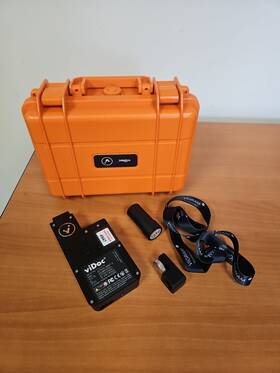
Manufactured by viDoc, this model combines advanced technology with user-friendly features. 1x Smart Phone Documentation Guide. Includes: 1x ViDoc RTK Rover. 1x Dual Band GPS/GNSS Antenna.
The Pix4D RTK Rover is a 3D GPS/GNSS system designed for precise and accurate surveying mapping tasks.
part #: 3240062101210 prices
- $1950.00-$4250.00
specifications totalstationsurveyzo:
- brand: Vidoc
- country of origin: China
- ean: 3240062101210
offer totalstationsurveyzo:
- options: Ship-to-home
- quantity: 1
- started: May 4, 2026
- availability: In Stock
- sold: 0
payments totalstationsurveyzo:
- wallet: Apple-pay
- credit card: Diners-club
- other
seller totalstationsurveyzo:
- # reviews: 51
- city: Mountlake Terrace, Washington
- rating: 100.0%
shipping totalstationsurveyzo:
- cost: $9.75
- transit: 4-11 Days
- service: UPS Ground Saver
- type: Calculated
- carrier: UPS
- class: Economy
general totalstationsurveyzo:
- condition: Used
- Test, Measurement Inspection > Levels Surveying Equipment > Total Stations Accessories
returns totalstationsurveyzo:
- policy: No Returns
Vidoc PIX4D Is Similar To:
- Vidoc 3240.06 2101124 Pix4d Rtk Rover With Iphone 14 Pro Max Case 3d Gps gnss (74.6% similar) The included iPhone 14 pro max case allows for easy handling, making it convenient users in the field. Manufactured by Vidoc, this model combines advanced technology with user-friendly features. Includes: 1x Vidoc rtk rover with iPhone 14 pro max case. 1x rugged carrying case. The PIX4D rtk rover ...(April 17th, 2026)